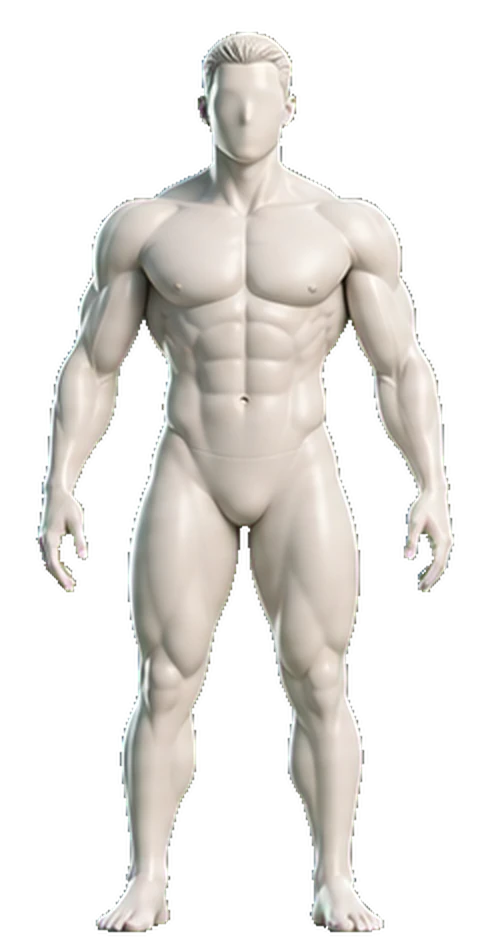
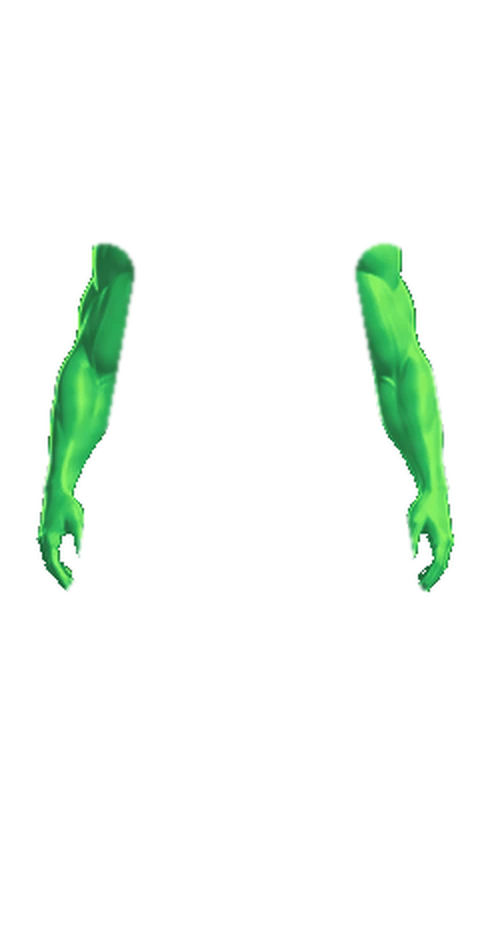
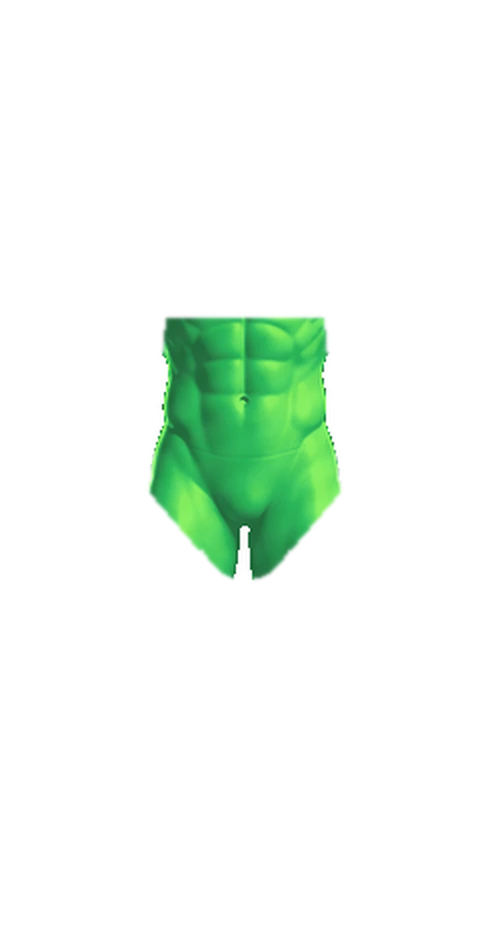
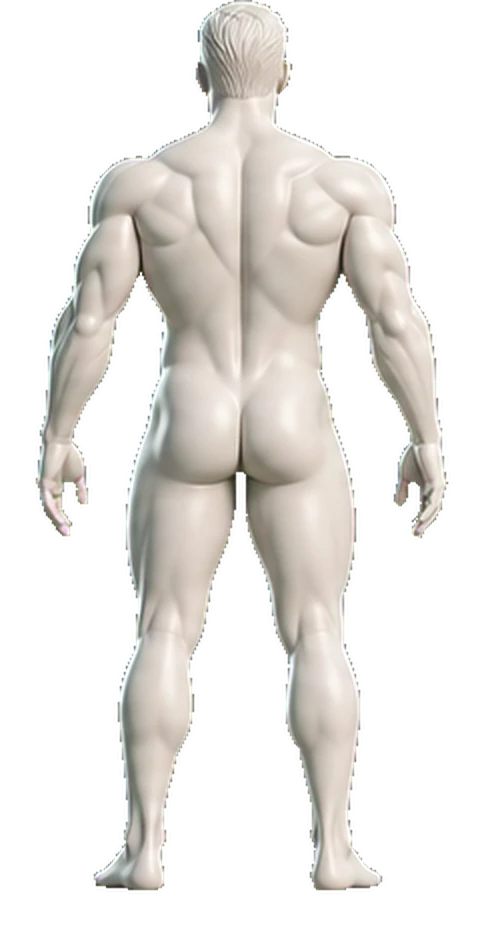
Per-muscle guidanceEight groups. Straight answers.
For each muscle group, Burnix gives you three things: a practical tip, a typical rest window, and the red flag that tells you when soreness is a warning — not a badge.
Chest
Press variations share load with shoulders and triceps — space heavy push days apart instead of stacking them.
- Rest window
- Typically 48–72 h after a hard session
- Red flag
- Sharp pain at the shoulder joint or collarbone is not soreness. Stop and reassess.
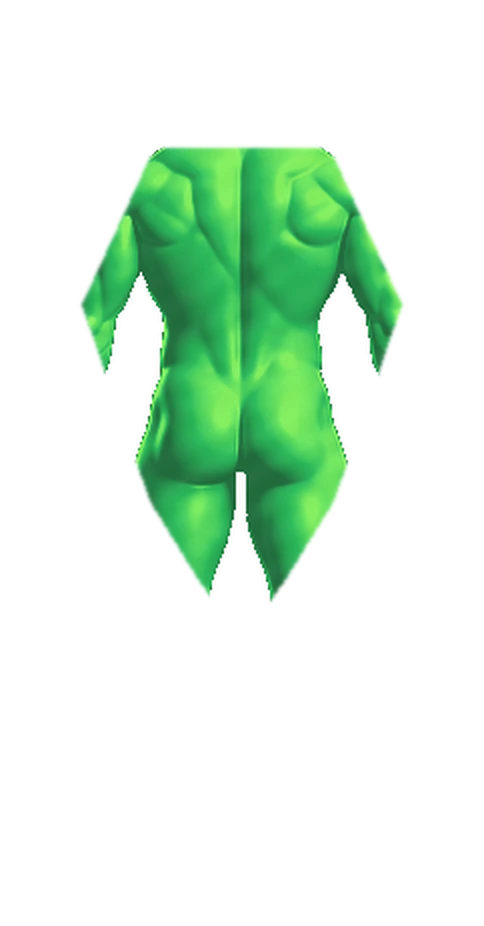
Back
Rows and pulls recover faster when your grip gets a day off too — rotate holds and implements across the week.
- Rest window
- Typically 48–72 h after a hard session
- Red flag
- Pain that shoots down an arm or a leg is a nerve signal, not muscle fatigue.
Shoulders
Shoulders work on push and pull days alike — count that indirect volume before you add more direct work.
- Rest window
- Typically 48 h between direct sessions
- Red flag
- Pinching at the top of a press is a mechanics problem. Fix the setup, do not push through.
Arms
Biceps and triceps collect plenty of indirect work from presses and pulls — direct arm days need less than you think.
- Rest window
- Typically 24–48 h after a hard session
- Red flag
- Elbow pain that arrives with every rep is tendon, not muscle. Back the load off.
Core
Your core braces in nearly every lift — train it directly, but do not hammer it daily on top of heavy compounds.
- Rest window
- Typically 24–48 h after a hard session
- Red flag
- Lower-back pain during core work usually means form leaked. Reset before you repeat.
Quads
Squat patterns tax quads hardest — schedule your heaviest leg day for when you are freshest.
- Rest window
- Typically 48–72 h after a hard session
- Red flag
- Knee pain that sharpens as you warm up is a signal to stop, not to stretch harder.
Hamstrings
Hinges and curls load different ends of the muscle — rotate both across the week instead of repeating one.
- Rest window
- Typically 48–72 h after a hard session
- Red flag
- A sudden pull behind the thigh mid-rep is a strain risk. End the session there.
Calves
Calves carry you all day already — full range of motion beats sheer volume every time.
- Rest window
- Typically 24–48 h after a hard session
- Red flag
- Pain in the Achilles rather than the muscle belly deserves rest, not more reps.
Rest windows are general training guidance — in the app, guidance is written per muscle group, right where you plan your week.